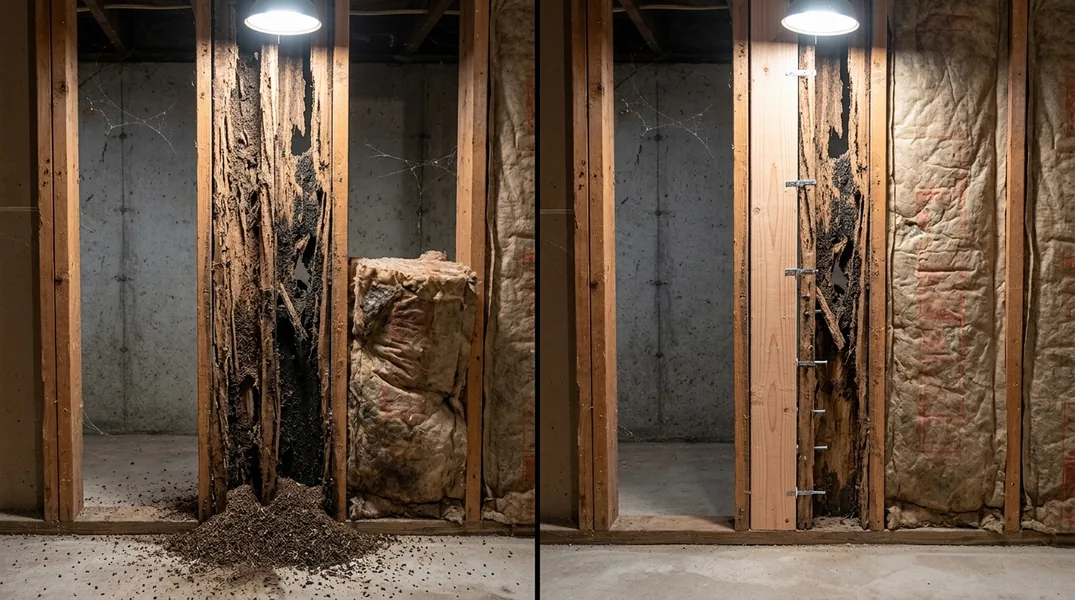
Wood Rot vs Carpenter Ant Damage: Why It Matters
If you own a home in Seattle, you've likely heard horror stories about wood damage. Two of the most common culprits are wood rot and carpenter ants, yet they're fundamentally different problems requiring different solutions. Understanding the difference between wood rot vs carpenter ant damage isn't just academic information, it's essential for protecting your investment and addressing the real threat lurking in your walls.
Many homeowners assume any visible wood damage means the same thing, but the reality is more nuanced. Wood rot is a fungal disease that breaks down the structural integrity of wood by consuming its cellulose. Carpenter ants, on the other hand, are insects that tunnel through wood to create galleries for nesting, but they don't actually eat the wood like termites do. The distinction matters because the repair approach, timeline, and cost can vary dramatically. Getting the diagnosis right means getting the treatment right, which could save you thousands of dollars and prevent catastrophic structural failure.
What Does Wood Rot Look Like? Key Visual Signs
Wood rot presents itself in distinctive ways that, once you know what to look for, become fairly easy to spot. The most obvious sign is discoloration, typically appearing as dark brown or black patches on wood surfaces. The affected wood often looks wet or damp, even if the area hasn't been directly exposed to water recently. As the rot progresses, the wood becomes soft and spongy to the touch, losing its structural density. You might notice the wood crumbles easily when poked with a screwdriver or other tool, almost like it's been partially turned to sawdust from the inside out.
Another telltale characteristic of wood rot is the presence of visible fungal growth or fruiting bodies. These can appear as white, gray, or black fuzzy patches on the wood surface or in nearby areas. In Seattle's damp climate, wood rot thrives, which is why it's such a common issue for local homeowners. The smell is also distinctive, often described as earthy or musty, similar to the odor of a damp basement or moldy attic. If you notice wood that appears to be shrinking, warping, or pulling away from its fasteners, wood rot could be the culprit. Unlike carpenter ant damage, which creates clean, visible tunnels, wood rot damage tends to be more diffuse and affects the wood's overall structural properties.
Carpenter Ant Damage Signs: What to Look For
Carpenter ants leave behind a very different type of damage signature compared to wood rot. The most distinctive feature is the presence of clean, smooth tunnels or galleries running through the wood, often following the grain. These tunnels are typically wider and more uniform than those created by other wood-boring insects, sometimes reaching the size of a pencil or larger. If you find sawdust-like material (called frass) near the damaged wood, that's a strong indicator of carpenter ant activity. Unlike wood rot, which produces a crumbly, deteriorated appearance, carpenter ant damage often leaves the wood surface relatively intact on the outside while hollowing it out from within.
Another key sign of carpenter ant damage is the actual presence of the ants themselves. Carpenter ants are relatively large insects, typically black or reddish-black, and often visible around infested wood, especially during early morning or evening hours. You might hear faint rustling or crackling sounds coming from within the wood, which is the sound of the ants moving through their galleries. Unlike wood rot, which requires moisture and fungal activity, carpenter ants can infest wood that isn't necessarily rotted or damp, though they do prefer areas with some moisture. The damage tends to be more localized to specific tunneling areas rather than the widespread deterioration you see with fungal rot.
Key Differences: Moisture, Spread, and Progression
One of the most important differences between wood rot and carpenter ant damage comes down to moisture. Wood rot absolutely requires moisture to develop and spread. The fungal spores need a damp environment to germinate and grow, which is why basements, crawl spaces, and areas near leaks are prime targets. Carpenter ants, while they do prefer some moisture, can infest dry wood and will tunnel regardless of the wood's moisture content. This means a carpenter ant problem might exist in areas of your home that seem perfectly dry, whereas wood rot will only develop where moisture is present or has been present.
The rate and pattern of spread also differ significantly. Wood rot spreads gradually through the wood as the fungus consumes the cellulose, and it can spread to adjacent wood if moisture conditions remain favorable. The damage is often progressive and can eventually compromise large structural areas if left untreated. Carpenter ant damage, by contrast, spreads through the ant colony's expansion. A single carpenter ant colony can contain thousands of workers, and as the colony grows, the tunneling expands. However, the damage is more contained to the specific wood members being tunneled through. Understanding these differences helps explain why Wood Rot & Dry Rot Repair requires addressing the moisture source, while carpenter ant treatment focuses on eliminating the colony and preventing future infestation.
When to Call a Professional: Wood Rot & Dry Rot Repair Near Me
If you've identified what you believe is wood rot or carpenter ant damage in your home, the next step is determining whether you can handle it yourself or need professional intervention. Minor surface-level wood rot in non-structural areas might be manageable with careful removal and replacement, but extensive rot or rot affecting structural elements like floor joists, beams, or foundation sills requires professional assessment and repair. The same applies to carpenter ant damage, particularly if the infestation is widespread or affecting critical structural components.
Seattle Carpentry specializes in identifying and repairing both types of wood damage, and we strongly recommend getting a professional evaluation if you're uncertain about what you're dealing with. Misdiagnosing the problem could lead to incomplete repairs and recurring issues. For example, if you treat wood as if it has carpenter ants when it actually has rot, you'll never address the moisture problem driving the fungal growth. Conversely, if you treat rot when the real issue is carpenter ants, the ants will continue tunneling and cause additional damage. We offer a free estimate to assess the damage and provide a clear action plan. You can reach us at (425) 671-4050 to schedule your inspection.
Repair Options and Next Steps for Seattle Homeowners
Once the type of damage has been correctly identified, the repair approach becomes clear. For wood rot, the primary solution involves removing all affected wood and replacing it with new, pressure-treated lumber or solid wood appropriate for the application. This might involve Floor Joist & Subfloor Repair if the damage is in your crawl space or basement, or more extensive structural work if beams or load-bearing walls are involved. Critically, the moisture source must be identified and corrected, whether that means improving drainage, repairing leaks, increasing ventilation, or installing moisture barriers. Without addressing the moisture, new wood will eventually succumb to the same fungal attack.
Carpenter ant damage repair involves removing infested wood and replacing it, then treating the area to eliminate any remaining ants and prevent future infestation. Sometimes this can be as simple as removing and replacing a few linear feet of trim or siding, but other times it requires more substantial work. In some cases, particularly severe infestations affecting Beam Replacement & Load-Bearing Wall Removal situations, structural reinforcement becomes necessary. The best approach is to get a professional assessment to understand the full scope of damage and the most cost-effective repair strategy. Seattle Carpentry has the expertise to handle both simple and complex wood damage scenarios, and we're committed to restoring your home's structural integrity.
Looking for a professional carpentry contractor in Seattle? Seattle Carpentry responds fast for all your carpentry needs.
Get a Free QuoteOur services: Wood Rot & Dry Rot Repair · Termite Damage Repair · Floor Joist & Subfloor Repair